Issue #8
3 min read
Coaches & Parents
Modern childhood is experiencing a quiet crisis: the steady atrophy of real-world "social intuition." Safe behind screens, children are losing the ability to decipher micro-expressions, navigate friction, or handle face-to-face conflict. When an application or social dynamic becomes uncomfortable or difficult, the algorithmic default is simply to swipe away and disengage.
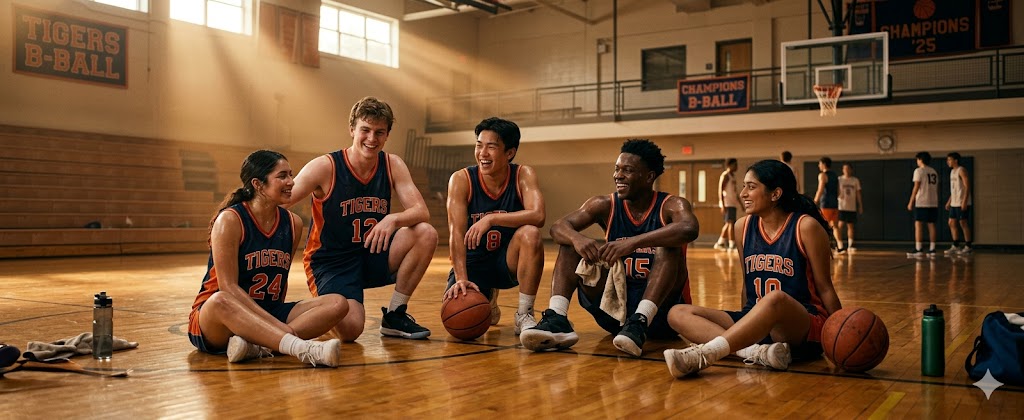
Team sports offer an antifragile antidote to this isolation — a physical laboratory where challenges cannot be bypassed or muted. True security isn't found in an artificial world free of stress; it is built within the immediate accountability of the huddle. In a shared sports environment, athletes must look each other in the eye, read body language under intense physical pressure, and negotiate conflict in real time to achieve a common goal. This constant, high-stakes human interaction sharpens their social radar and establishes deep structural empathy.
By anchoring player development in behavioral science coaches can actively guide youth to choose the "Earned Joy" of real-world connection over the hollow lure of screen time. The lessons planted by great coaches during these raw, unscripted team moments form an unbreakable foundation of character that guides an individual's professional and personal relationships decades down the line.
Inside the Huddle: For Coaches
Step back in the huddle: Let players navigate on-court disagreements face-to-face first to build autonomous conflict resolution and sharpen their social intuition.
Leverage short video clips: Replace long lectures with high-fidelity clips highlighting positive micro-behaviors, such as defensive communication and collective hustle.
Co-author the growth tree: Allow players to contribute to drill progressions, creating psychological ownership that strengthens team loyalty and structural accountability.
Inside the Huddle: For Parents
Praise multi-dimensional empathy: Celebrate your child when they notice a teammate or classmate struggling and choose to step up as a vocal catalyst.
Encourage face-to-face apologies: When school or team conflicts arise, challenge your athlete to resolve them in person rather than hiding behind text messages.
Highlight body-language clues: Discuss game film or everyday interactions together, teaching them to read non-verbal cues and micro-expressions under real-world pressure.